A Wild Bulbasaur Carved from Soap
This is so cute, clever, and impressive. An easy subscribe for me.
This is so cute, clever, and impressive. An easy subscribe for me.
Mary Bruno was the person who introduced me before I delivered my TEDx talk a few years ago. She's an incredible letterpress artist who runs a shop up in St. Cloud.
Anyway, she sent out a newsletter today linking to these excellent perimenopause greeting cards, and it reminded me that she has an entire shop of dope-lookin' art. I am in the process of designing my new office and it may need to feature one of these prints.
Betteridge’s law of headlines unfortunately applies here, but this was such a fun watch.
I also snort laughed at “ROM MAXXING.”
Angela Collier made an apology video for making people feel dumb for not knowing that physicists use LaTeX instead of Word, and it’s so delightful.
I learned that LaTeX is pronounced “Lah-Tech”. I assumed for decades that it was pronounced like the fabric?
I also enjoyed her anti-Microsoft rants peppered throughout the video. As someone who inherited a legacy .NET project, I could not agree more with her sentiments here.
I had the honor of interviewing Tom Greenwood on the Constant Variables podcast a few years ago, and he remains one of my favorite voices in the world of sustainability.
He's got a new book called Overton's Garden coming out in a couple weeks and I couldn't smash the pre-order button fast enough. I highly encourage you to do the same. You can preview the first chapter on his website.
If the rest of the book is as good as that preview, it's gonna be an inspiring read.
In the ’90s, Berkeley Systems’ After Dark screen savers were ubiquitous: Flying Toasters, Fish, and Starry Skylines animated across computer screens in school labs, homes, and offices everywhere. They served a practical purpose in preventing burn-in on CRT monitors, but also entertained, with animations that could be funny, surreal, beautiful -- sometimes gross.
They were works of art.
Running After Dark modules in the present day has involved fussy configuration of Mac OS emulators or vintage hardware. Even then, no single emulator or vintage computer can faithfully run every module: some animate too fast, some too slow.
Afterglow is an emulator built specifically for running After Dark modules -- the original 68k module code, not a remake or port -- with no dependencies on ROMs or classic Mac OS. Created in the spirit of software preservation, it makes After Dark easy to enjoy today and for years to come.
The app uses the Internet Archive to browse After Dark installations, and to my delight, there is a Simpsons one available to use.
Can't wait to watch Homer eat my desktop for the next month!
Thijs de Buck, an MRI physicist based in Utrecht, the Netherlands, recently posted on Reddit that he built a speed and distance tracker for his hamster’s wheel, with the data automatically uploaded to Mollie’s own Strava account. Mollie, his 10-month-old hamster, is now committed to logging nightly runs with distance, pace, and time.
One recent activity showed 6.06 miles in 4 hours and 37 minutes. The next night, Mollie logged 5.55 miles in 3 hours and 56 minutes.
Makes you wonder what other animals we could make Strava accounts for, no?
These word guessing programs need the hysteria of people running around like Chicken Little claiming the sky is falling because it feeds into smoke and mirror valuations that the Worst People on the Planet™ are selling to investors and the media. These guys need the hysteria because their money will run out if they try to sell a word guessing program instead of the almighty, all-knowing digital savior for capitalism and war.
It took me a while to understand that the sky is not falling. The sector as it exists now is not sustainable. The money will run out if we stop feeding into the hype.
LLMs are super useful. But they’re not magical, and they’re not all-powerful.
It’s like in the early 2010s when people used Underpants Gnome Math to describe how their app idea would make them rich.
The solution to technology is not more technology. The solution to loneliness is each other, a wealth that should be available to most of us most of the time. We need to rebuild or reinvent the ways and places in which we meet; we need to recognise them as the space of democracy, of joy, of connection, of love, of trust. Technology has stolen us from each other and in many ways from ourselves, and then tried to sell us substitutes.
I spent the weekend attending my town's annual summer festival. It was a ton of fun despite being packed to the gills with people, a natural consequence of our town's decade-long explosion of growth.
That growth has manifested in the shape of mcmansions packed together like sardines, distribution warehouses for mega corporations, and data centers for notorious champions of privacy and democracy.
Our town has courted a couple of new gyms and restaurants, but I'd love to start seeing us recruit businesses that provide opportunities for us to commune. You know, things like new dining options, shopping centers, theaters, arcades, churches, pickleball venues! Hell, why not a Puttshack?
Maybe I need to find a way to buy that open parcel of land that's a couple blocks from my house and build a coffee shop on it.
We are told that machines will become like us, but in many ways they demand we become more like them. To let that happen is to lose something immeasurably valuable. That immeasurability is what makes this struggle difficult, but what cannot be measured can be described or at least evoked and valued. It cannot be boiled down to simple metrics such as efficiency and profitability.
Resisting the annexation of our hearts and minds by Silicon Valley requires us not just to set boundaries on our engagement with what they offer, but to cherish the alternatives. Joy in ordinary things, in each other, in embodied life, and the language with which to value it, is essential to this resistance, which is resistance to dehumanisation.
In case you haven't heard: it's the Summer of Doing The Thing!
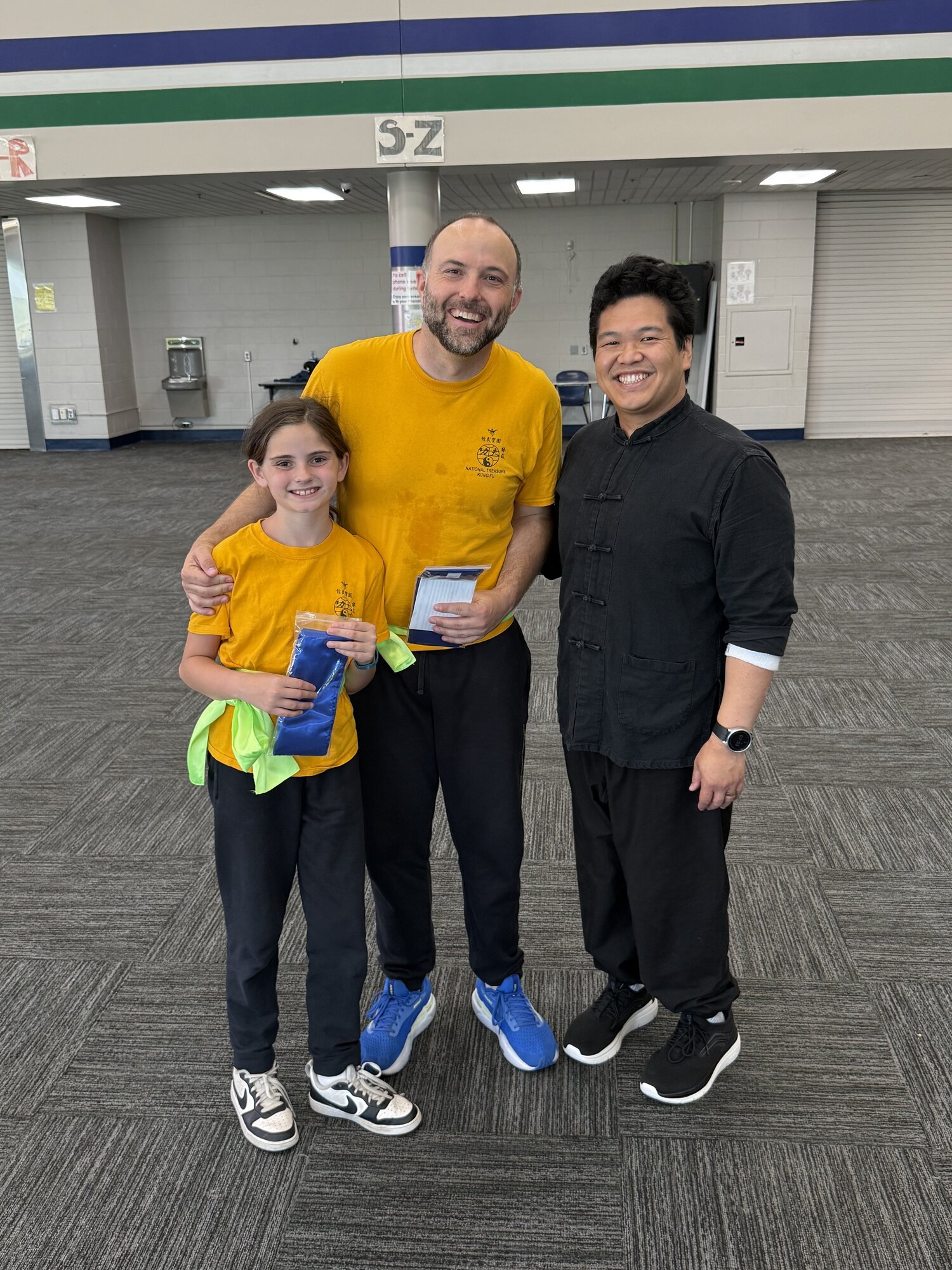 Charlee and I received our blue belts in kung fu. Doing the entire second form from start to finish is my favorite form of meditation. Right now, my tornado kick gets 270 degrees of rotation, working my way to doing a full 360.
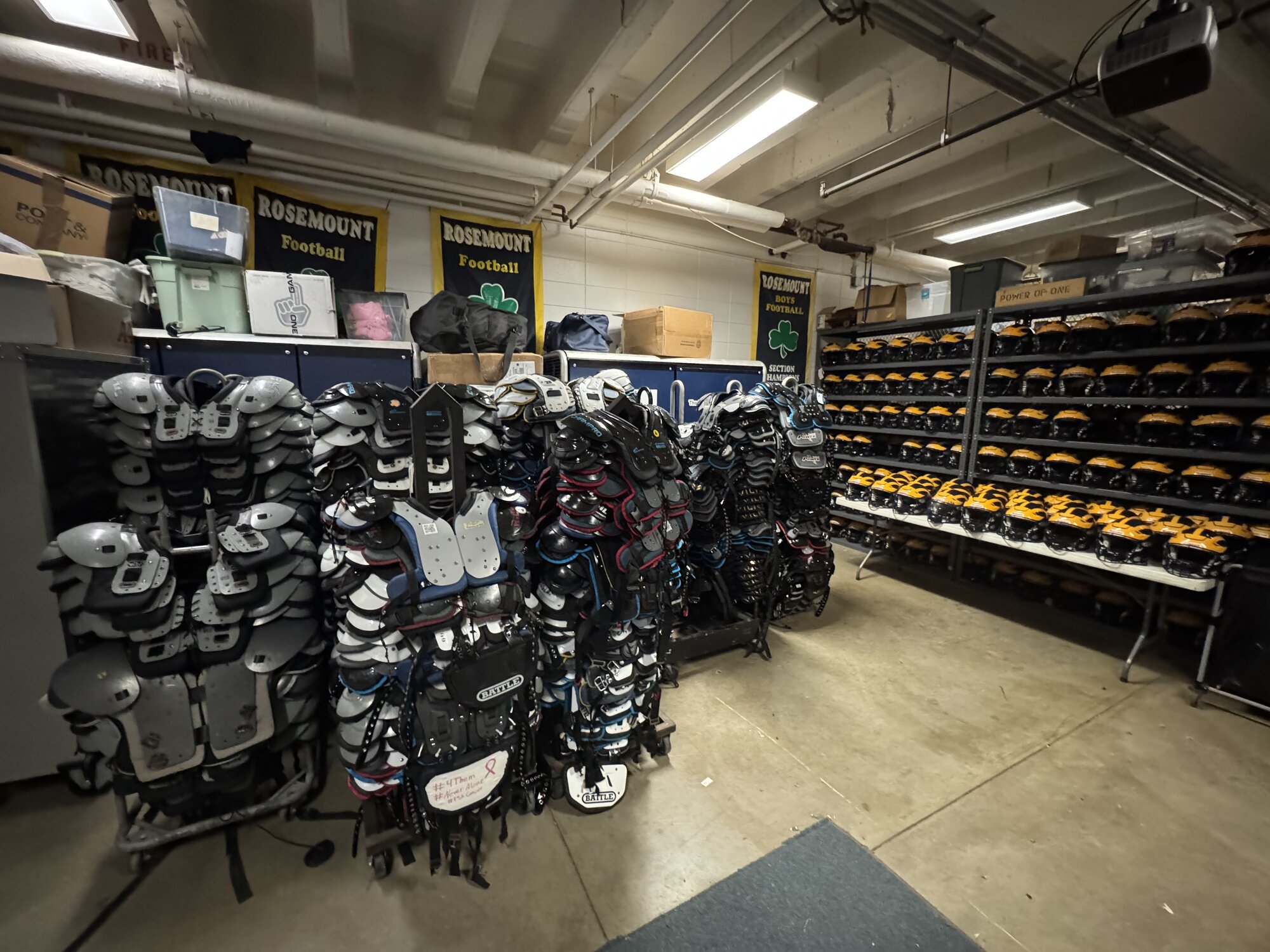 I helped a friend add QR codes onto every helmet and pair of shoulder pads at my wife's school.
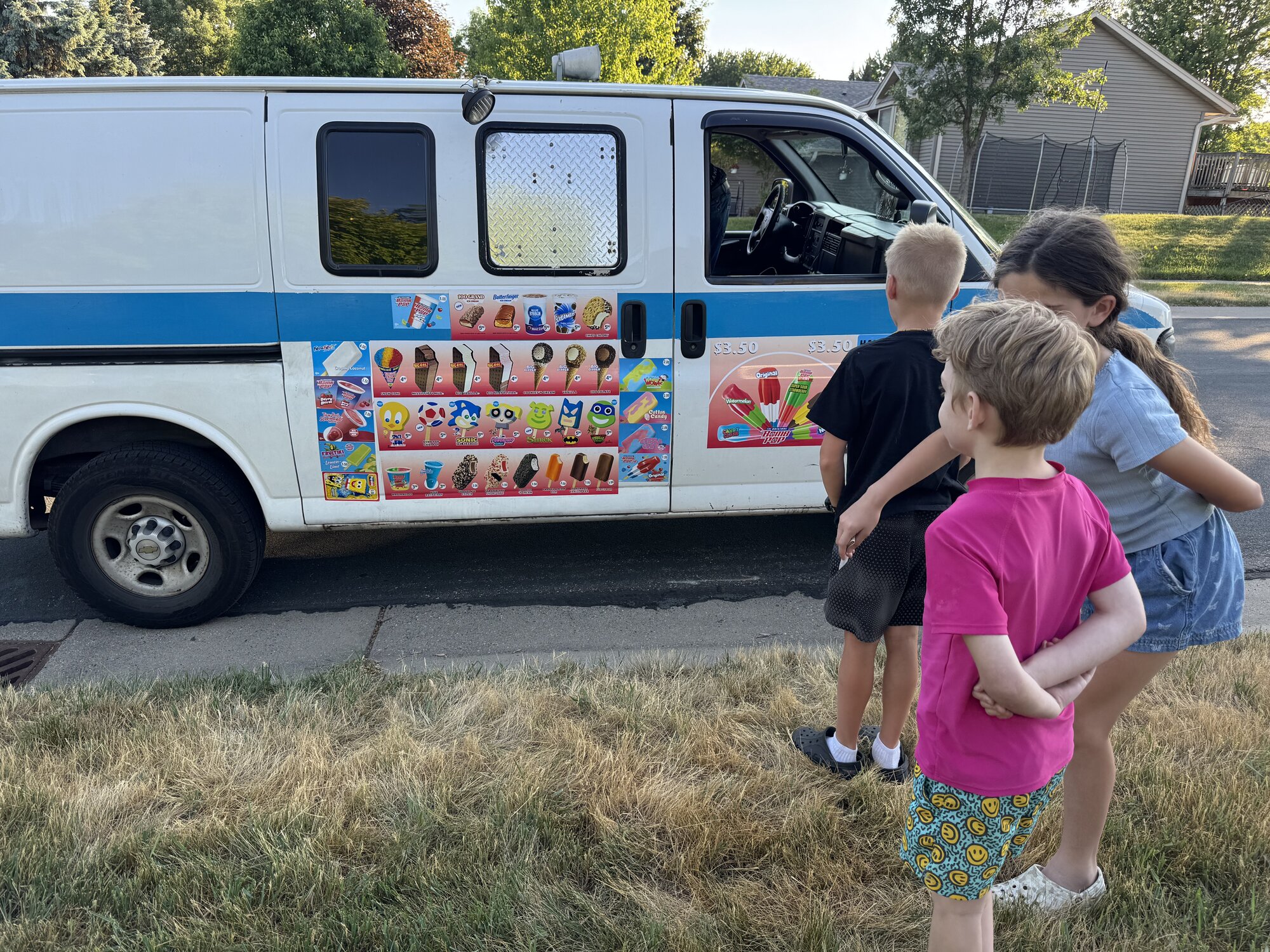 I got ice cream from an ice cream truck.
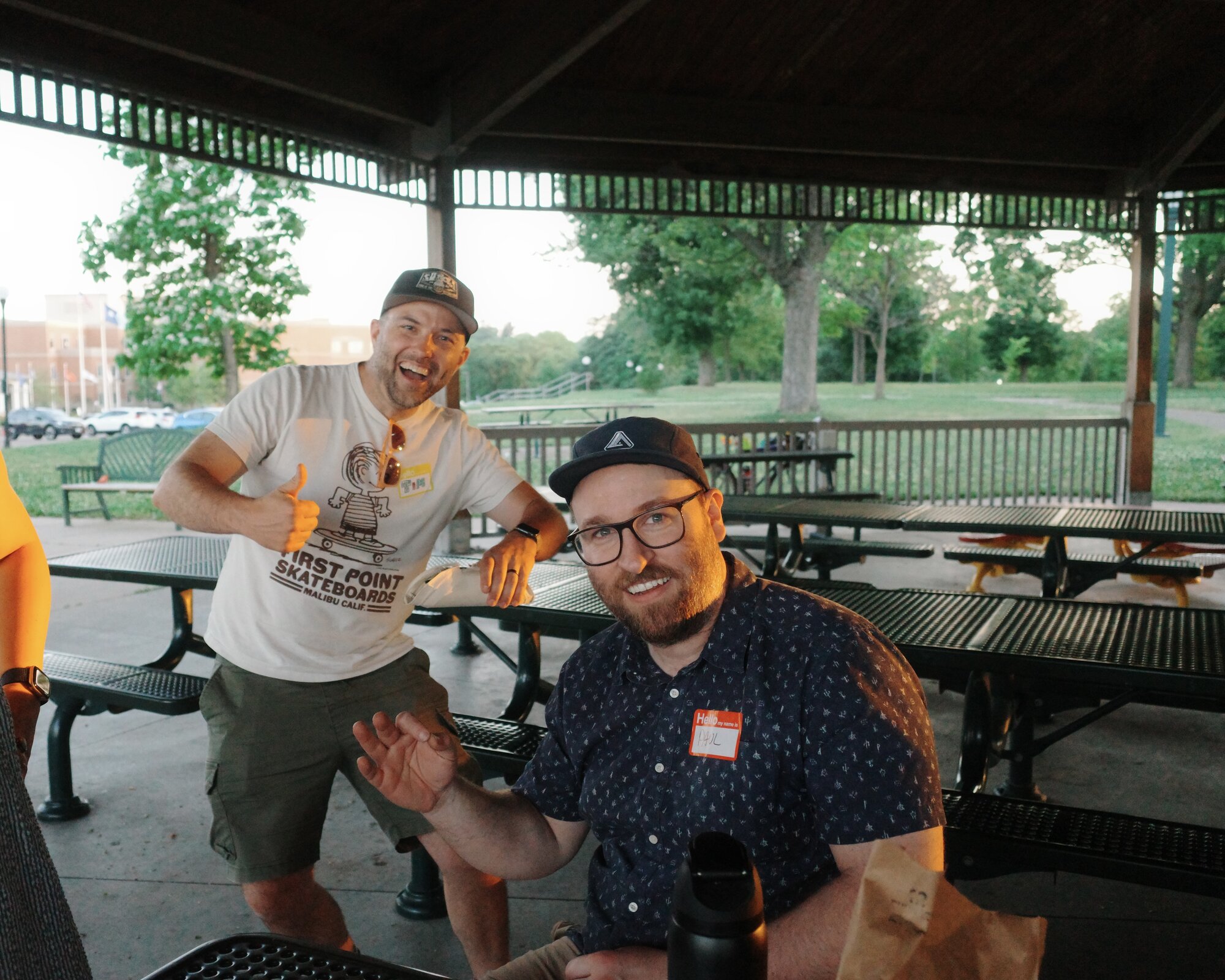 I met up IRL with a bunch of my internet nerd friends including my buddy Paul!1
I also learned that one of those internet nerd friends plays drums for Saves The Day, which led to me to bumping Stay What You Are all month.
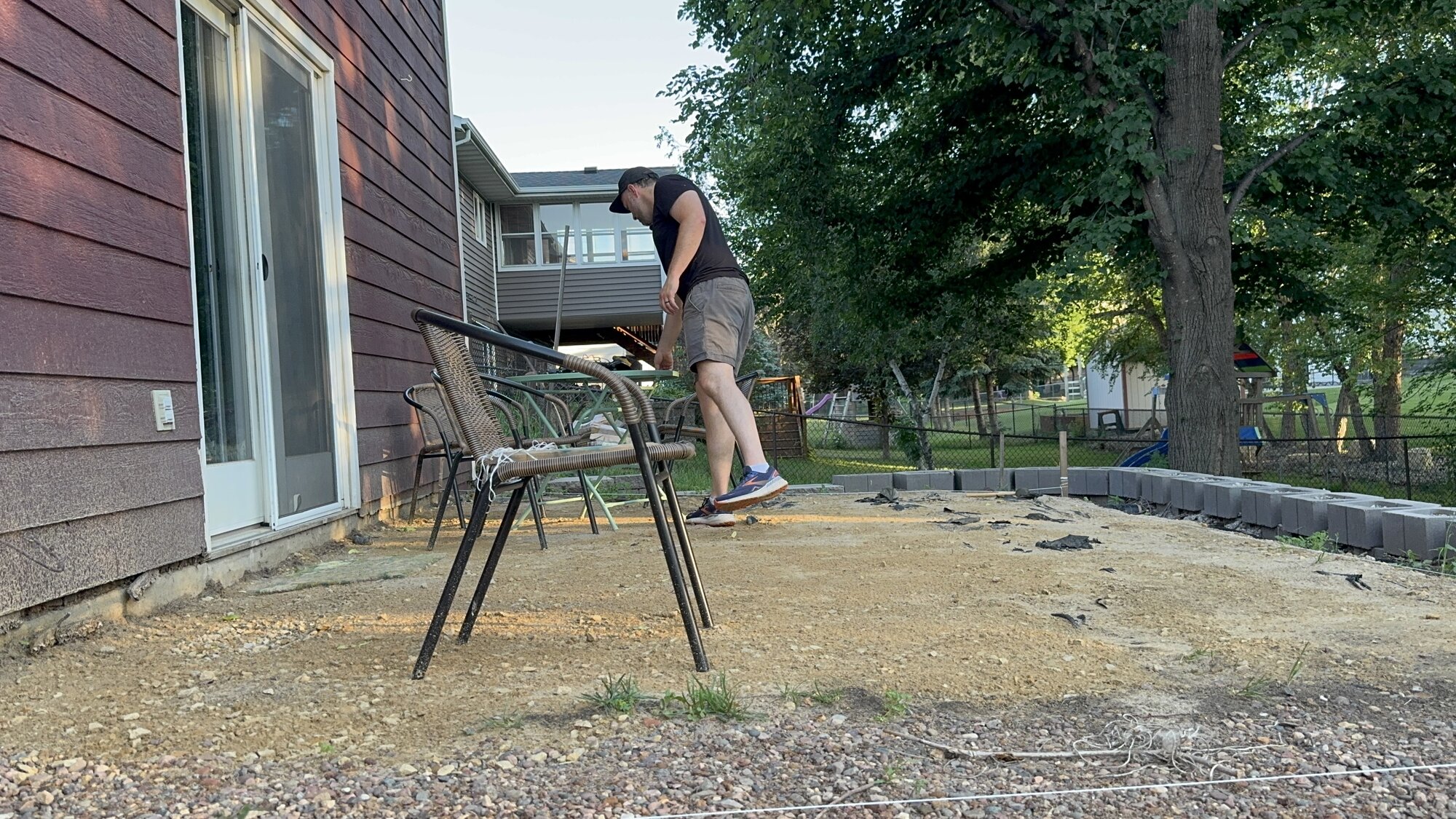
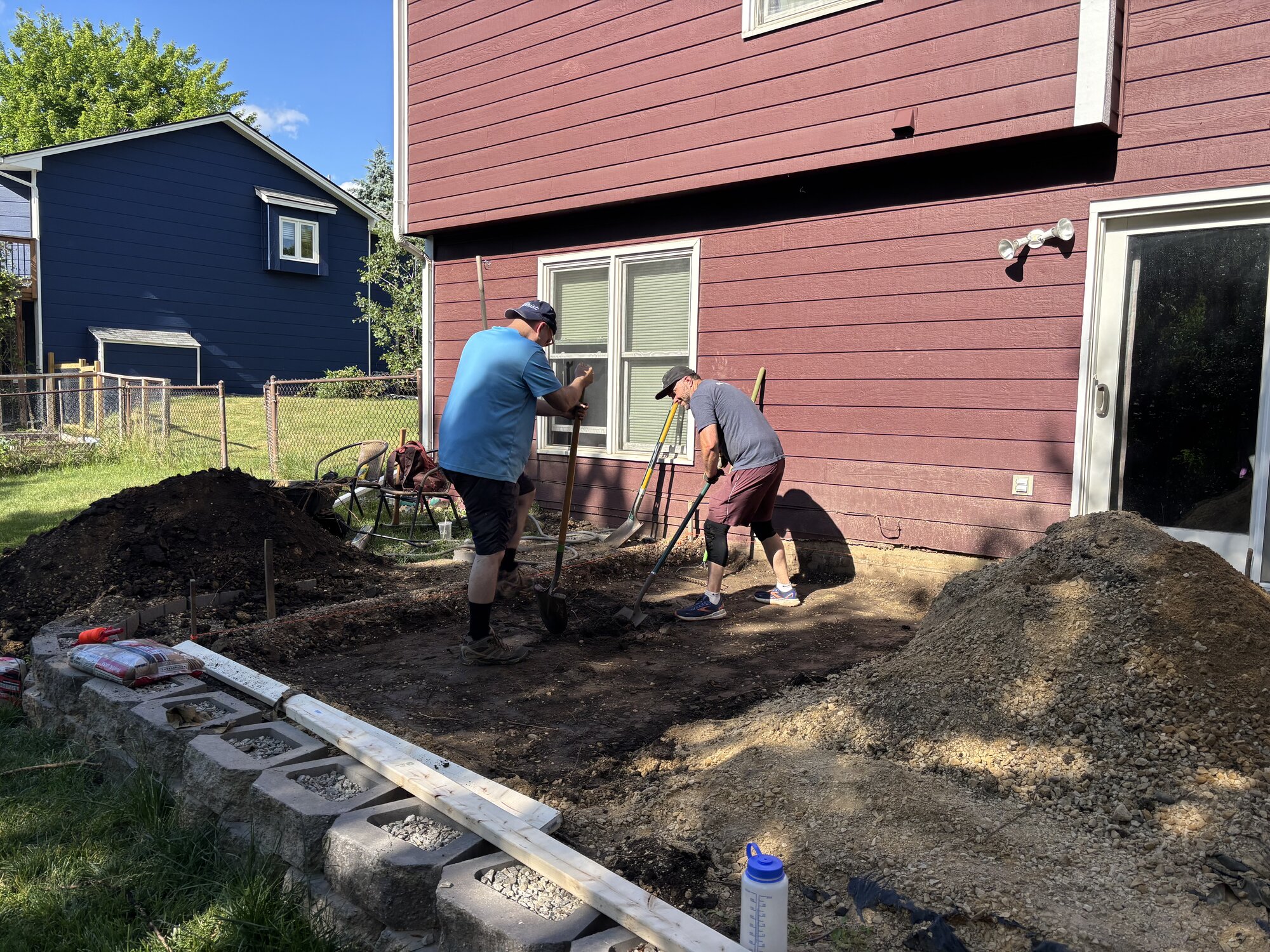 I spent a ton of time working on my patio, getting the ground properly graded. It’s been a full year since we destroyed the old patio. I keep imagining how good the first beer sitting on the new patio will taste.
Widow’s Bay. I haven't been consuming much TV lately2, so it was nice to have a show to binge and get sucked into.
Stephen Root is a national treasure.
Also, that fourth episode where Patricia throws the party is perhaps the biggest "oh my god, what a payoff!" moment in television history.
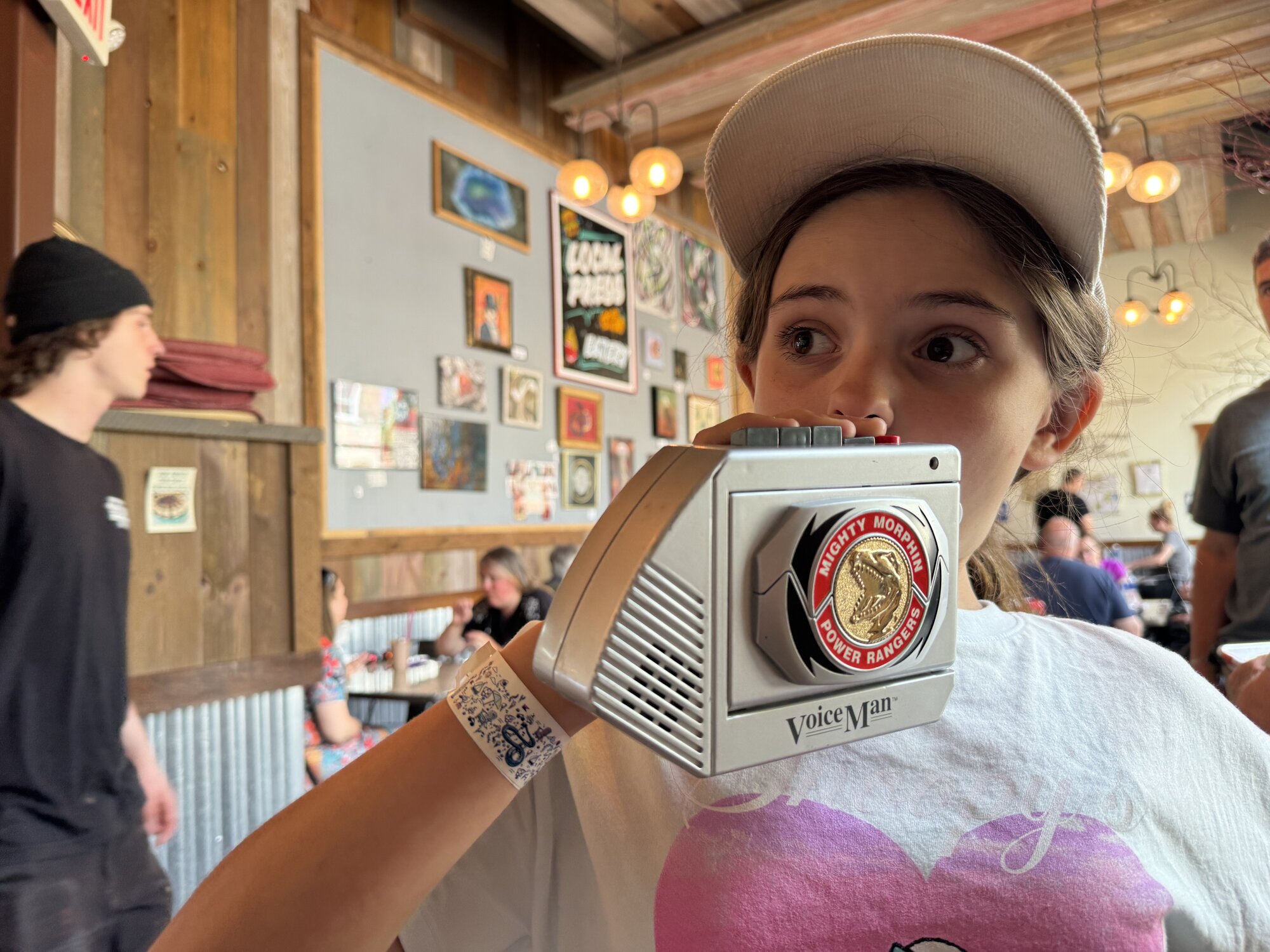
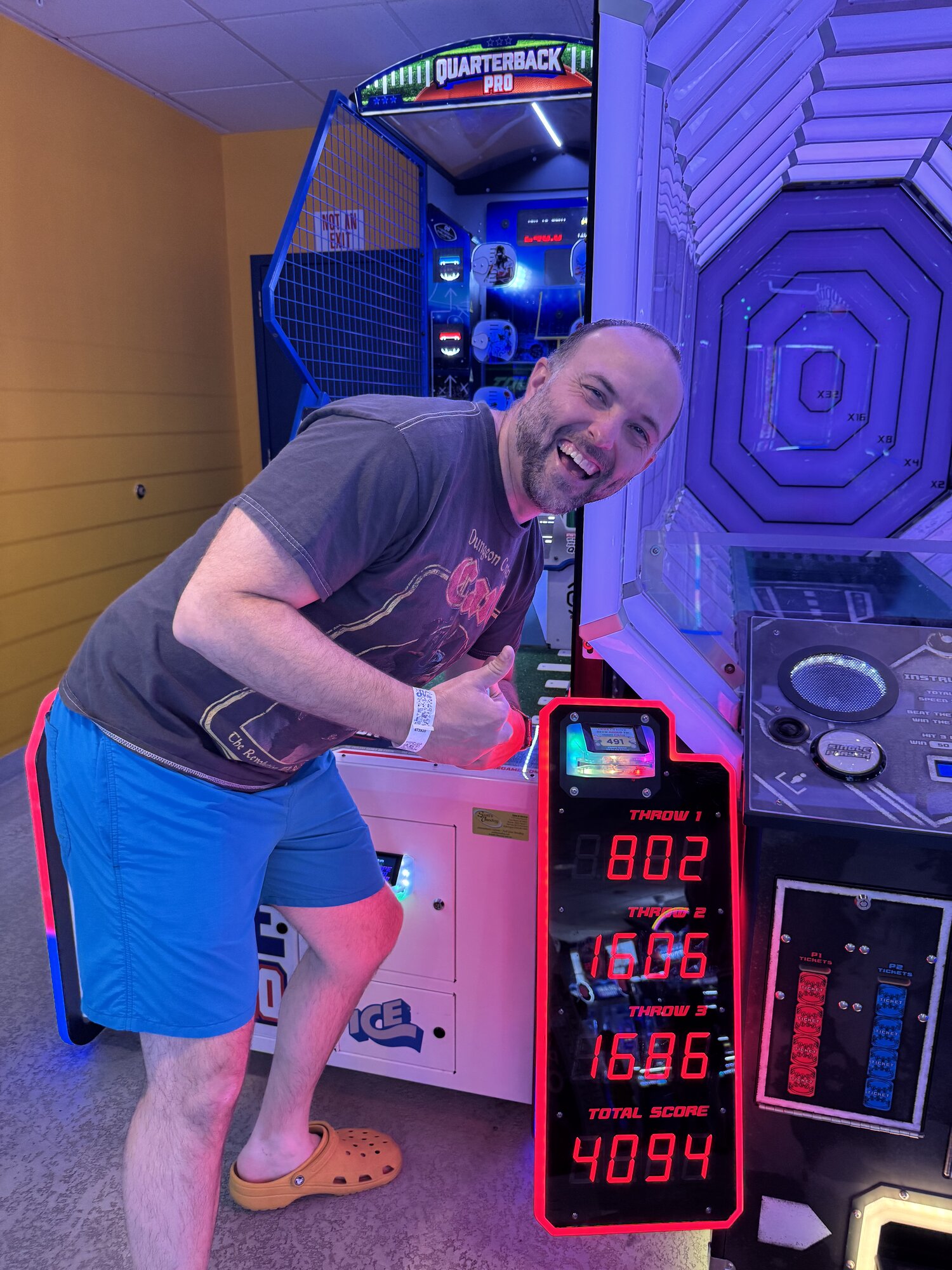
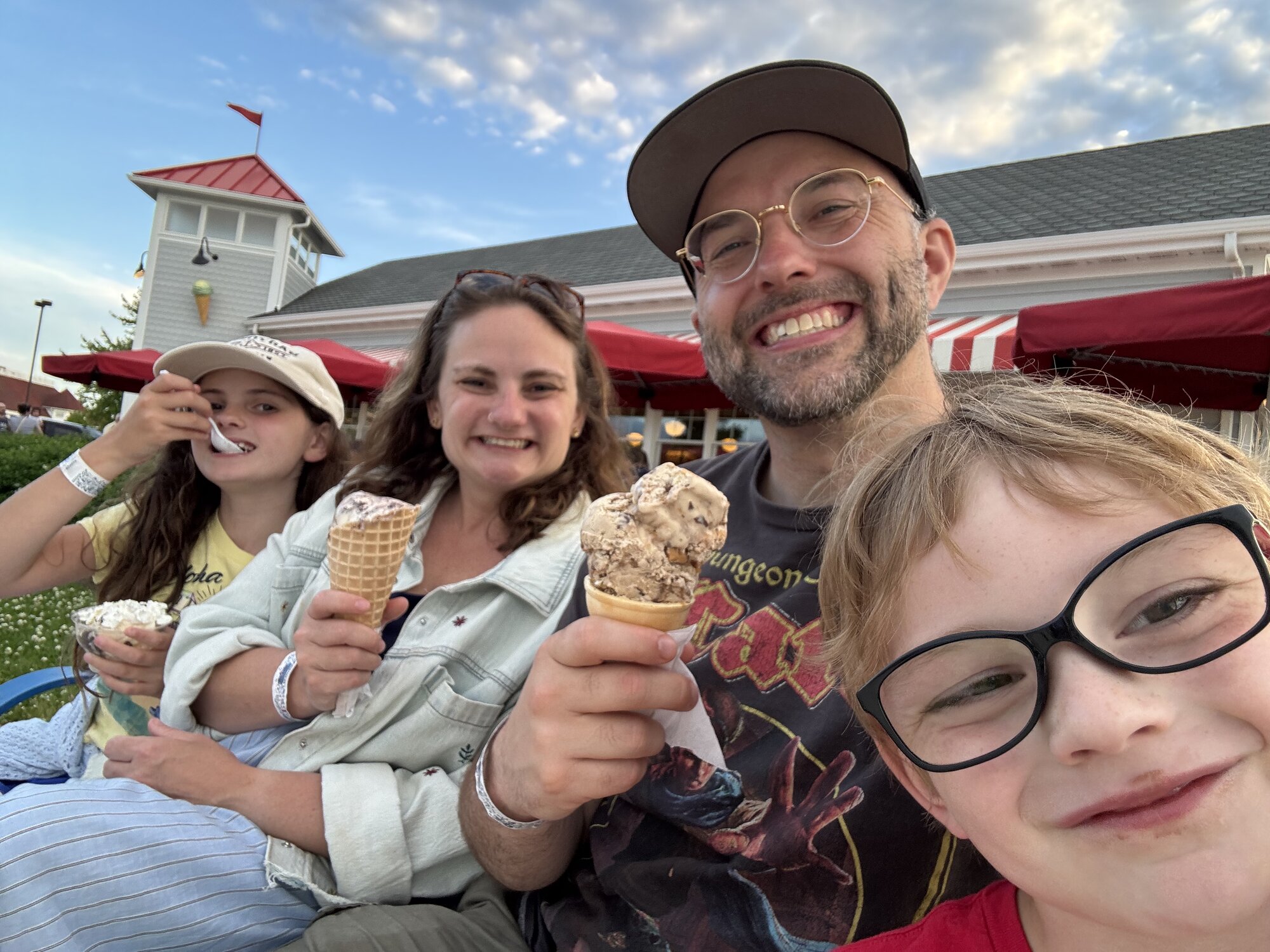
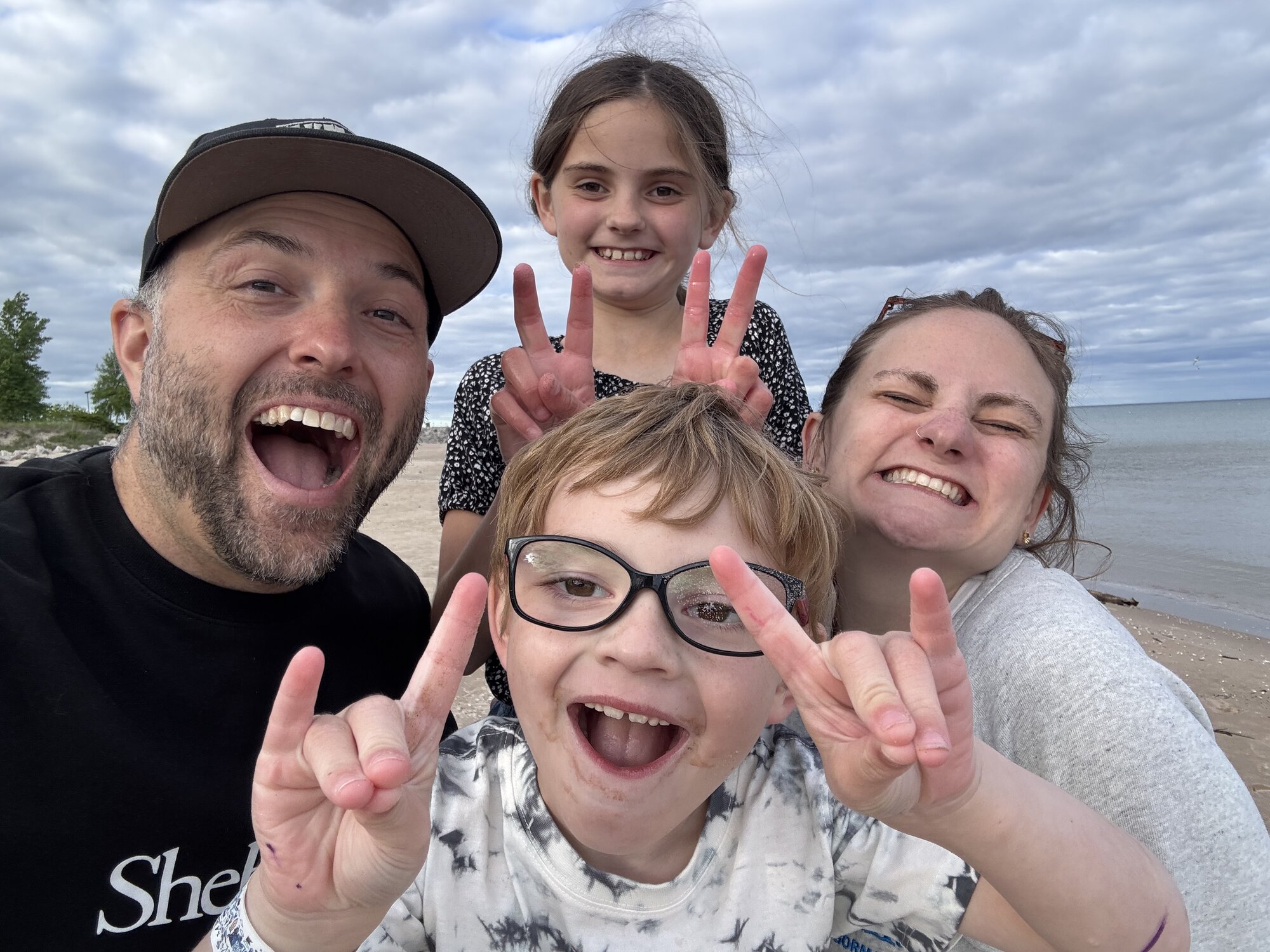
We went to Sheboygan for a long weekend, which is the unofficial family start to the summer. We ate a ton of ice cream. Charlee found a Power Rangers-themed TalkBoy. Gus went down a ton of water slides. I set the high score on the arcade's pitching game. Shannon got to soak up some hometown feels.
Shannon and I went on a day date to the Mall of America. It was frustratingly busy, but I saw it as a sign that our communities need more third spaces.
The real flex here is that I still very much enjoy hanging out with my wife, she's the best.
We also saw Backrooms. The movie theatre lost power as we were getting concessions. I'm not sure how I would've reacted if our theatre lost power in the middle of the horror film.
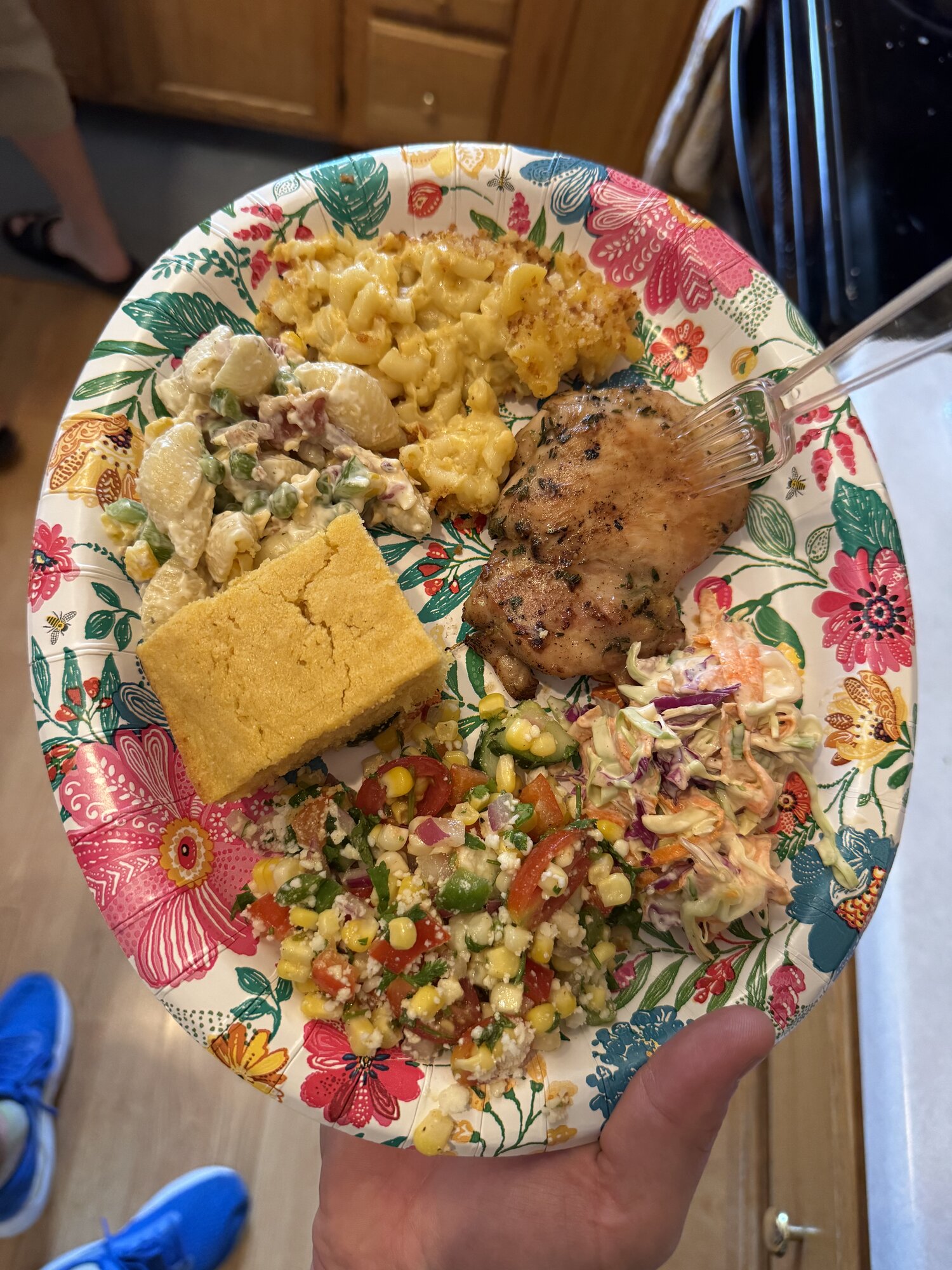
Shannon made an absolute feast for Father's Day. She spent maybe 14 hours in the kitchen across the weekend putting together everything. It made me feel incredibly special.
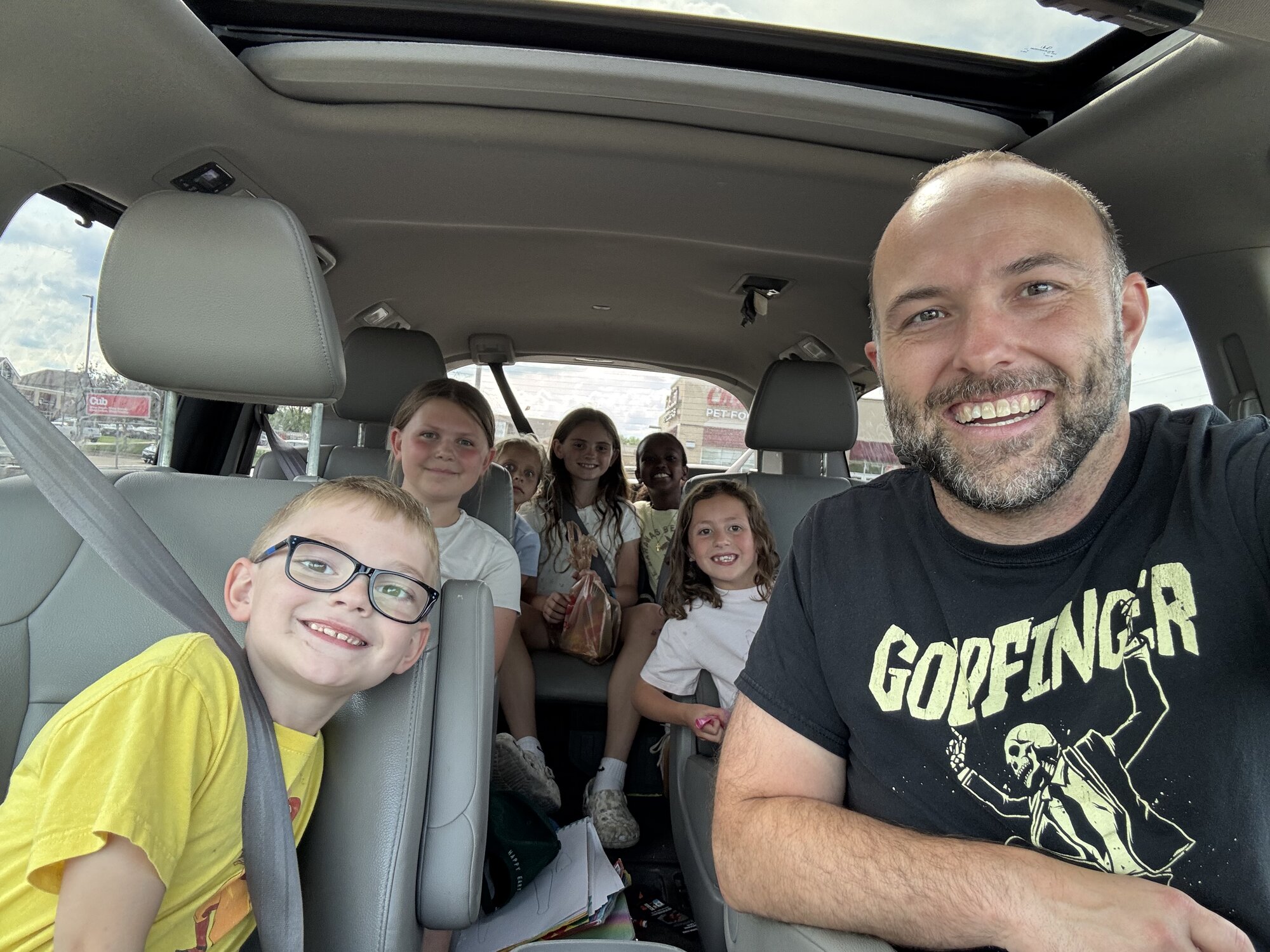
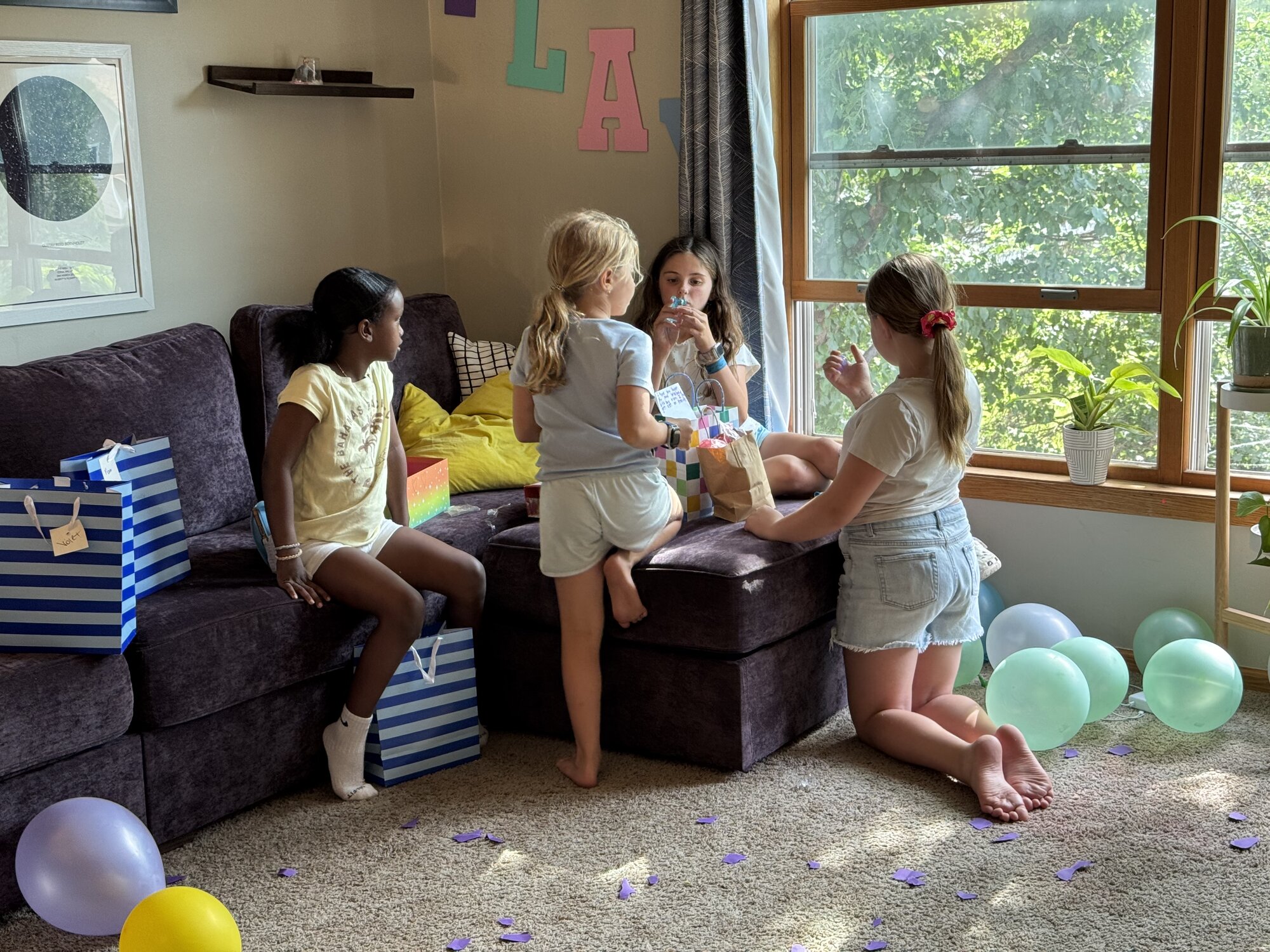
My daughter turned 10. Her most recent birthdays were pretty big bashes (Grand Slam, a limo trip around town, that sort of thing), so hosting a low-key sleepover was a nice change of pace.
Love that lil' girl.
The next day, my wife and I got to pour beer at the Pride Dabbler.
I jump at every opportunity to pour beer at a beer festival. I get to spend a minute per person, doing my best to make them happy. Sometimes it's dropping a small compliment or joining an in-progress conversation between two patrons and riffing on it.
Regardless, they always smile after being handed a beer, especially a particularly dope-as-hell pilsner made by my pal Ariel.
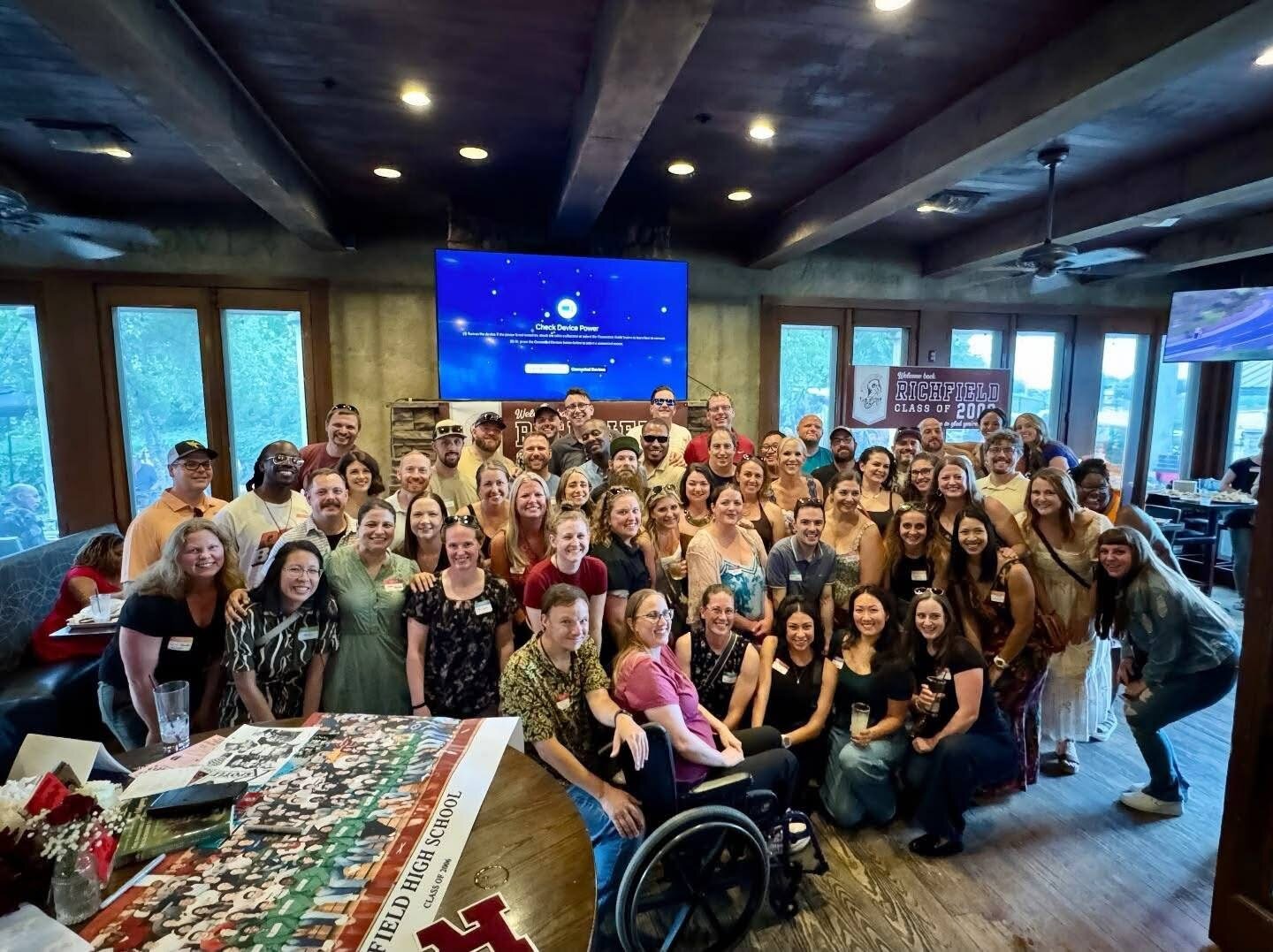
The next day3, I had my twentieth high school reunion. I got to catch up with eighty-ish people who I haven't really thought about in the past two decades.
I was touched by how many of our conversations were about people who weren't in that room. It felt like community, everyone making sure that those who weren't down for the awkward conversations were still accounted for and cared about. There were a bajillion other feelings for sure, but on the whole, my bucket was filled that night.
I also explored the high school tunnels, verified that the Jeff Corner graffiti is still there (with subsequent classes leaving their own mark), relived the announcements glory days, closed down Cowboy Jacks, and eventually fell asleep at 4:30am.
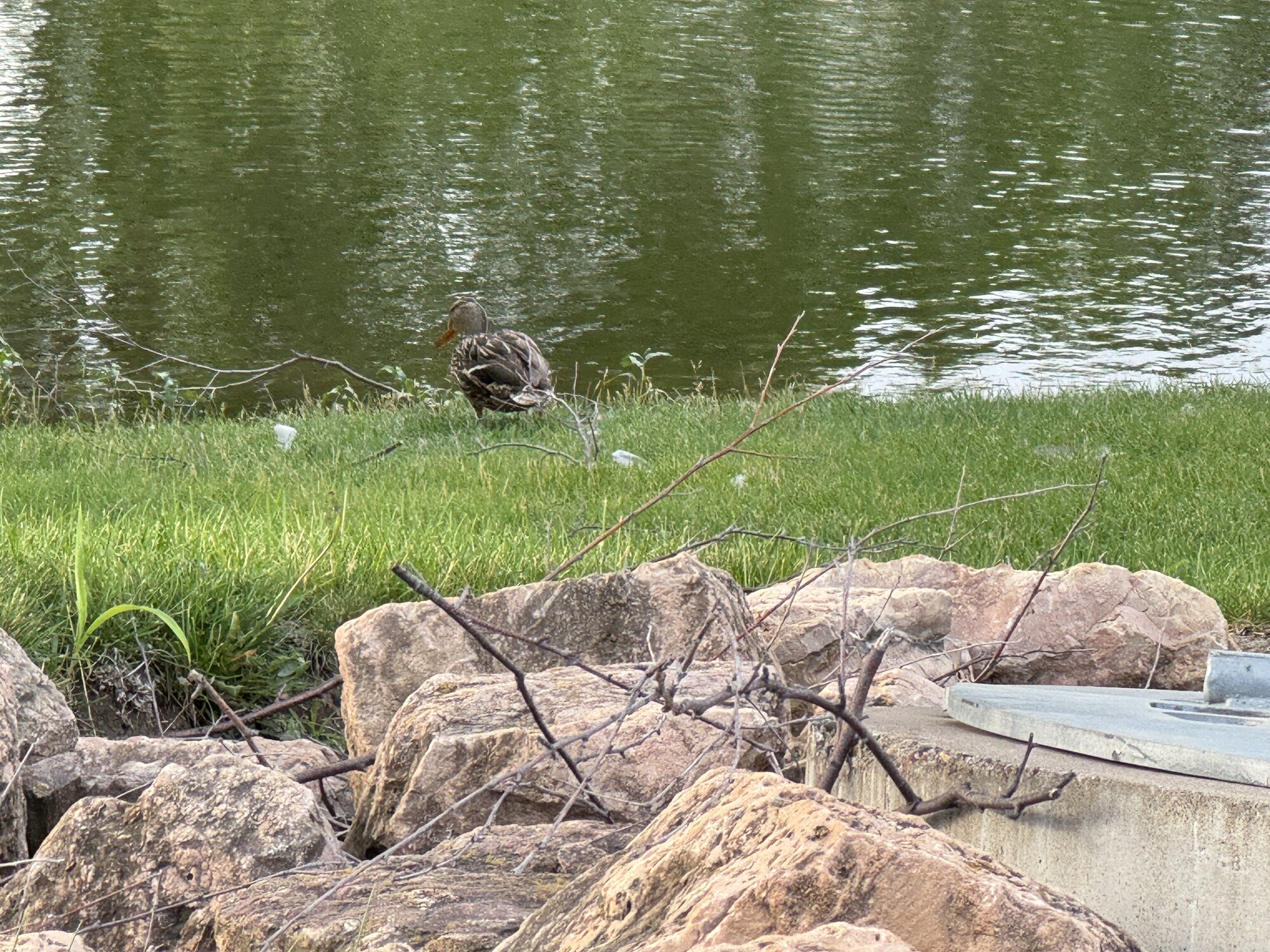 Gus and I were tipped off that a family of baby ducks had just landed at the pond by our house, so we walked up and checked them out. There were three moms and a nest.
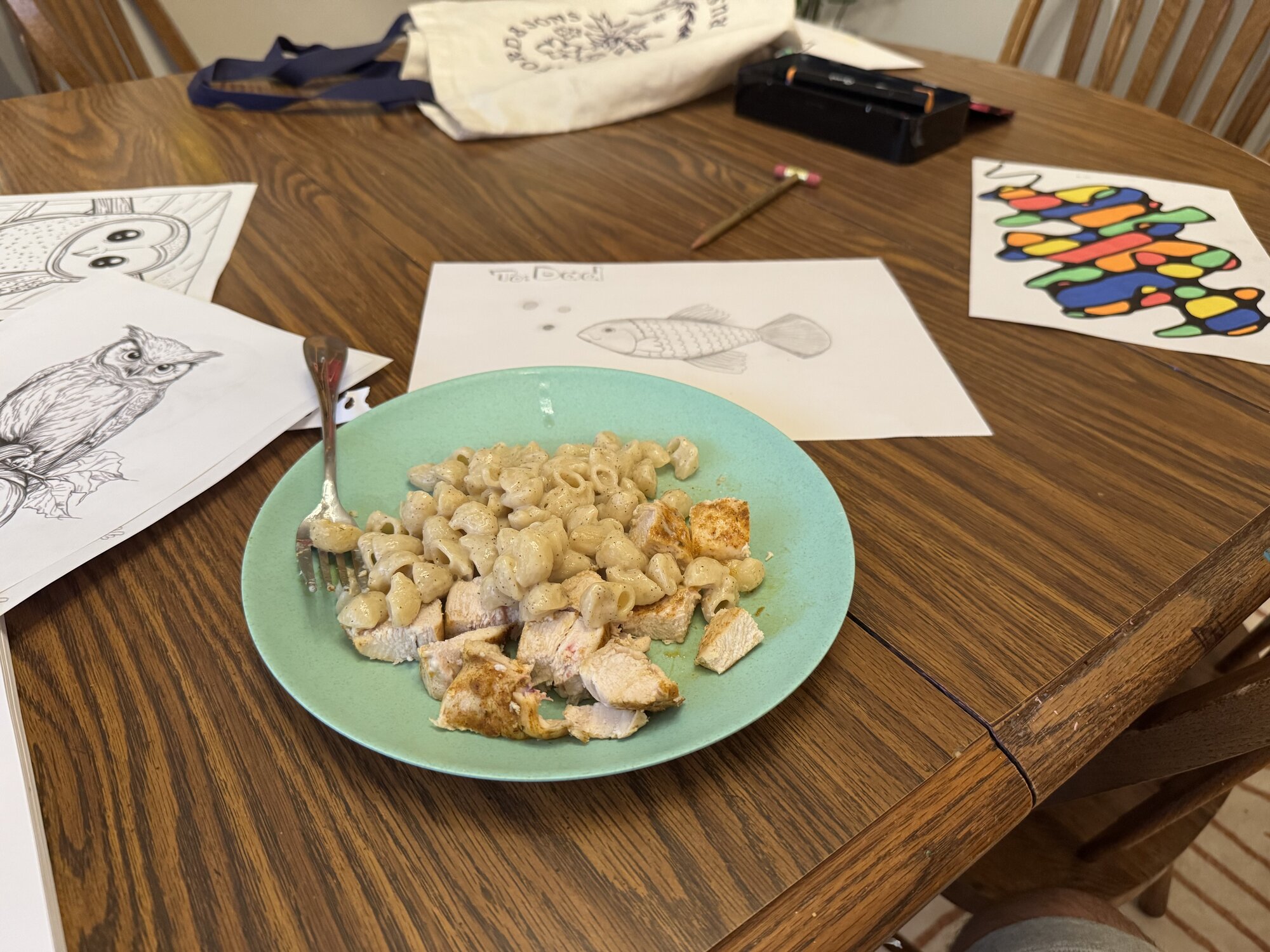 I cooked dinner. It was a chicken breast and fancy kraft mac n cheese.
I’ve recently taken an interest in cooking. I’ve considered eating a utilitarian act: something you did only to sustain yourself and nothing more. As with all heretofore acts I’ve considered to be utilitarian, I’m trying to find the joy in doing them. It was fun to put the dish together, it tasted pretty good, and I learned a thing or two that I will apply the next time I whip up a chicken breast.
June was a great start to the Summer of Doing The Thing. I’m trying hard this summer to be intentional with mindfulness and presence.
My wife took Gus and a neighbor kid up to the park, and she overheard them talking to each other. “Do you know what me and my dad did last time?” he asked. “We went in the spider web and looked at the clouds. Sometimes it’s okay to be bored.”
Of all the things I’ve done so far this summer, passing along that lesson was the most important.
Also shout out to Randy who had some nice things to say about this blog, but regrettably didn't get a photograph with him. ↩
Basically, if I can't watch it with the kids, I don't watch it. Except for Game Changer and other Dropout shows. Oh, and Drag Race All Stars. ↩
Turns out "doing the thing" multiple days in a row is exhausting, but totally worth it. ↩


