Behind the Red Dot: Confessions of a TEDx Newbie

My TEDx talk is now live. About a month has passed since I delivered the talk and I've been trying to figure out the best way to write about my experiences leading up to the big day.
After several iterations, I decided that instead of giving a sequential order of events, I will instead rattle off a list of some lessons I learned in the hopes of both illustrating what I went through to get to the red dot and also giving future TEDx speakers some advice on what can help them get through the process themselves.
Note: There are Amazon affiliate links scattered throughout this post. ?
Say "yes" even when you feel like a fraud.
About a year ago, this funky tool called ChatGPT was released to the public. I was immediately captivated by it and started doing everything I could to understand its capabilities.
I also couldn't help but go down an ethics rabbit hole with questions like "how did they get the data for all of this" and "how will this be used to make people's lives worse?"
Around the same time, a friend of mine was putting together potential AMA topics for the upcoming year for Minnestar, and I suggested she put together a panel with experts talking about this very topic.
She said that was a great idea, and she put me on a panel with Damien Riehl, a TEDx speaker who has been working in the AI space as a technologist and lawyer for most of his career.
I have to admit, it was pretty intimidating to go from "a passing interest in AI ethics" to "sit on a panel as an expert," but I figured it would be a good opportunity, so I said yes.
After a really fun and fruitful conversation, I thought that would be the end of my career in AI public speaking.
Shortly after the talk, my friend (Justin Grammens) sent me a DM encouraging me to respond to the request for talk proposals for his upcoming conference about applied AI.
Once again, I found myself with an opportunity to talk about something I would hardly call myself an expert in, but after reflecting on it, I said yes. Considering my background in journalism and technology, I saw prompt engineering as an area in which I could get up to speed quickly and piece together a compelling talk.
The experience was amazing. I ended up making connections with folks all over the industry who are leveraging AI in novel ways. You could just feel the energy and excitement during the entire event.
A day or two after the conference, I had an email show up in my inbox from the organizer of TEDx St. Cloud, asking if I'd be interested in a quick phone call.
That quick phone call ended up being well over an hour where we shared our thoughts around the current state of AI. What was making people afraid? Why are so many people excited? What could "normal people" take away from a 10 minute talk about artificial intelligence?
For the third time in a year, I was presented with an opportunity to say yes.
I thought back to my first two AI talks from the year. I really enjoyed sharing the stage with an AI expert and people seemed to enjoy my opinions during that. I really enjoyed the conversations that came out of my prompt engineering talk.
Over the past couple of years, I've been learning to start having confidence in myself. If I can stand up in front of a group of AI experts and say something interesting to them about prompt engineering, I should be able to stand up in front of a group of normal people and say something interesting to them about artificial intelligence in general.
I said yes. And in retrospect, I don't regret it one bit.
I asked for a ton of help. And I got it.
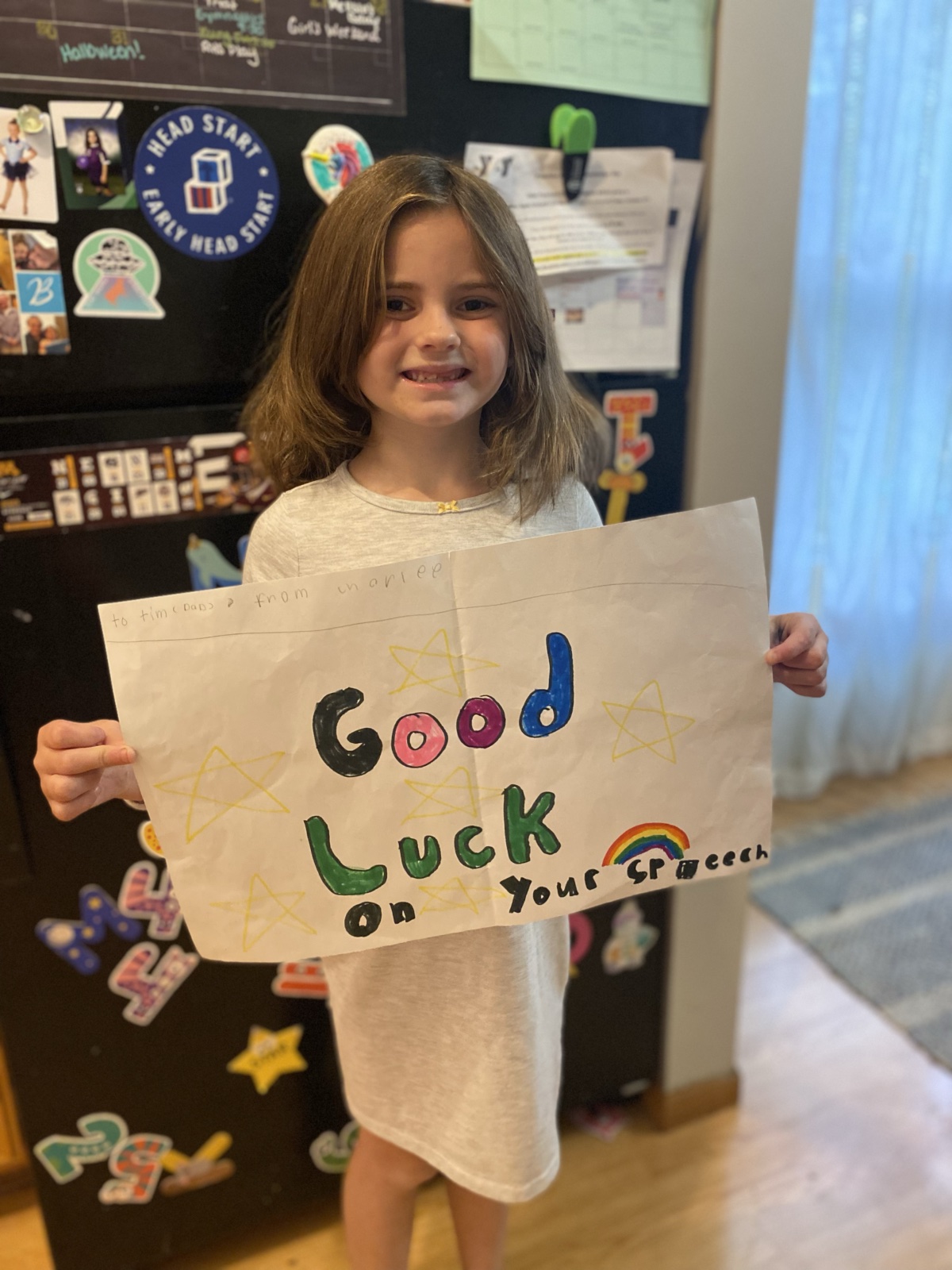
I mentioned my TEDx talk opportunity to a few folks in the lead up to the event, and there wasn't a single person whom I asked for help that said "no."
It's astounding how much people will help you if you let them.
As much as people want to help you, you do still need to go to them with specific asks. If you ask general questions, you'll get back general answers.
Instead, I asked a friend of mine who is an expert in branding how can I turn this talk into more talks.
I asked a friend who has spent tons of time investing in understanding the underlying AI technologies what insights he learned that would surprise normal people.
I practiced my talk with a few co-workers and asked them for ideas to improve my stage presence.
I met with the TEDx-assigned speaker coach and asked her for memorization techniques that previous successful speakers used.
People want to help. They feel honored to be part of the team, part of the mission. And it feels good to know I have a deep roster of allies who want to help see me succeed too.
Follow the TED way.
The organizers of TEDx St. Cloud strongly recommended we should read The Official TED Guide to Public Speaking shortly after we said "yes". It's written by Chris Anderson, the Head of TED, who has a delightful British sensibility to his delivery on best public speaking practices specifically as they relate to giving a TED talk.
A fellow presenter and I were chatting and he mentioned that he didn't have time to read the book, but he rather got the audiobook version.
I decided to use my early morning bike ride time to listen to the book, and for me, it was the perfect way to consume the information.
If you've watched more than a dozen TED talks, you probably could guess at the high level concepts of a quality one: don't read text from slides, maintain good eye contact with the crowd and keep them engaged, be able to distill the core ideas of your talk down to a sentence or two, and so forth.
Besides these points, the book also has some good takeaways such as considering what wardrobe you're going to wear and pick something that won't cause mic feedback or clash with the cameras.
Regardless of how you consume the book, the book is critical in helping you internalize and implement the core qualities that make up a good TED talk.
I would strongly encourage any future TED speaker to take the time to read it as well.
You'll ultimately need to deliver a speech you know isn't perfect.
I'm a recovering perfectionist. I hold myself to impossible standards and feel tremendous guilt when I don't live up to them.
As such, I tried hard during this process to let that go and be comfortable with "good enough".
What helped me the most was giving a copy of my speech to some trusted friends and asking them to pick things apart.
The vast majority offered one or two tiny semantic tweaks, but otherwise gave it a resounding two thumbs up.
If you're a recovering perfectionist like myself, you may find yourself wanting to spend your time continuously rewriting your talk instead of memorizing the talk.
Take it from me: after a certain number of iterations, the talk will be good enough. Lean on your support systems and trust them to tell you when you've hit that point.
Memorize moments, not words.
I have a recurring nightmare where I am suddenly standing backstage at my high school, and I'm compelled to walk out on stage during a theatrical performance, and the other characters all stare at me, and I have no idea what the lines are to the show.
There's probably some trauma to unpack there, but suffice it to say that I have a deep seated fear around rote memorization.
In all the talks I've given in my career, I've never tried to memorize a speech word for word. I believe it limits my ability to feel the crowd and tailor the specific wordage of a point I'd like to make on the spot.
Instead, I try to memorize moments. The process I normally follow when constructing talks looks like this:
- Write a thorough outline covering the main points I'd like to make.
- Build a slide deck to illustrate those main points.
- Rehearse walking through the deck over and over again until you can use the presenter view to remind yourself what point comes next.
The one hiccup with this TEDx talk is that we did not have a "presenter view" monitor in front of us while on stage. We did have a "confidence monitor" which was a mirror of the giant screen we had behind us, but there was no way to prepare for what slide was coming next.
In order to combat this, I had to actually get closer to word-for-word memorization, but instead of words, I memorized phrases.
When I was transitioning between points, I knew the exact phrases I wanted to hit, and then I remembered one or two words associated to that phrase.
As an example, one piece I continually kept missing in my rehearsals was this two-part phrase:
Each of those leaps in technology brought many changes to my life, both voluntarily and mandated by societal pressures. I mean, try being a kid in 2004 without a MySpace.
Adapting our lives to this new tech requires a bit of optimism and a ton of curiosity. None of it will work right out of the gate without us changing our behaviors and our expectations.
I'd always nail my epic MySpace joke, but then I'd forget what my next phrase was, so I memorized that the word "adapting" came after the word "MySpace."
That way, I wouldn't forget that my "MySpace" moment led into my "adapting our lives" moment.
Memorize by listening to yourself.
Much in the same way I found it was easier to consume the TED book by listening to the audiobook, I found it was easiest to practice my speech by recording myself giving it into my phone's voice memo app, and then replaying that again and again and again.
One funny part of that is that you need to get a take of you recording it without screwing up. The reason I kept missing my "Myspace"/"adapting" transition was because I recorded my talk while walking around the front of my office, and a truck nearly hit me while I was in the middle of that take.
That particular moment took place in the last 90 seconds of my talk, so I would've needed to re-record the whole thing to get a clean version of that take.
Learn from my mistake: if you're going this route, record yourself in a quiet room where you're focusing on the script and nailing it as perfectly as you can.
By the way: this was one area I was particularly proud of myself for not overcomplicating. I'm a professional podcast editor and a former podcast host. I have access to high quality production equipment, and I could've easily made a ton of work for myself to edit and produce a high quality recording that nobody would've listened to except myself.
Instead, I decided to keep it simple. More often than not, your phone is good enough.
Reciting your speech to yourself is one thing. Doing it in front of others is entirely different.
Most of my practicing of the speech took place while on a walk around the block or in front of a mirror by myself.
The first time I practiced it in front of others was when my coworkers assembled around me about two days before I gave the talk.
It's amazing how much higher the stakes are when you are forced to look at others in their eyes and try to convince them that what you are saying is worth their time (let alone inspire them to take action in some regard).
Besides my coworkers, I also performed my speech twice for my wife, twice for my fellow TEDx presenters, and once for my seven year old daughter.
If I have one regret, it was that I didn't try to practice it in front of more people. I was so damn nervous trying to stutter through my speech for all of those audiences.
And maybe it's because I deeply care about the opinions of these folks. Performing for those I love induced all those anxiety-laden parts of my brain that fill me with fear about how they'd react, how they'd perceive the talk, where they'd find holes and flaws.
As you might expect, I wasn't booed off the stage by these people. They offered one or two pieces of constructive criticism, but ended up being far more supportive than I could've anticipated.
Get over your monkey brain reactions and put yourself out there. Each attempt gives you the opportunity to polish your act.
You will swell with pride at the growth of your fellow presenters.
I only had a little interaction with my fellow presenters in the build up to the event, but even from our first group meeting, you could instantly tell two things about them: all of them are optimistic in nature, and all of them have something interesting to say.
Each of the speakers went through a journey to get their idea as polished as they possibly could. Watching them get in the red dot and deliver their talks was an unexpected celebratory moment for me.
One moment that stood out to me in particular was Kyle, a physician who was speaking about the use of artificial intelligence in ACL surgical procedures. He had a good anecdote about grabbing a beer with a professor of his, and then set up a joke like this: "What followed was... several more beers." It was a dry, glorious joke that he rehearsed several times to (what I'm assuming was) empty silence each time he gave it.
Hearing him drop that joke during the actual performance, and hearing the audience respond with boisterous laughter, was just one of many special memories I'll take away from the night.
My coat made me feel like a badass.
Two disparate things I took away from the TED book were:
- Be cognizant of what you are wearing on stage
- Find a way to include your family as part of your talk preparation
If I had to describe my sense of style over the past 30 years of my life in a thesis, it would be: "whatever is the cheapest thing that doesn't make me look horrible."
My wife has been instrumental in helping me evolve my wardrobe over the past decade, so it only made sense to give her the assignment of making me look good on stage.
We decided to head up to the Mall of America and walk around to figure out what would look best for me.
One of the first stores we went into was a Banana Republic. For those of you like me who are not well-informed when it comes to fashion, Banana Republic is not exactly a cheap store.
In fact, it's owned by the Gap family of stores, which serves as the most premium brand in the family (the cheapest being Old Navy, followed by Gap itself).
Clearly, this flies in the face of my central fashion thesis.
Giving this talk, though, made me reflect on that thesis. It reminded me of an episode of How I Built This with Jenn Hyman of Rent the Runway that I listened to years ago. Jenn mentioned that she was inspired by the fact that her sister dropped tons of money on a new dress rather than rewear the old one.
Her reasoning? The outfit is part of the memory. It's part of the experience. Rewearing a dress lowers the value of the memory.
I wanted to get something new that made me feel like a confident, stylish tech expert. Dressing the part would further emphasize the importance of the event and make the memory that much more impactful for me.
So I decided while we were shopping that I wasn't going to look at price tags. I told my wife to pick out whatever she thought would make me look the best.
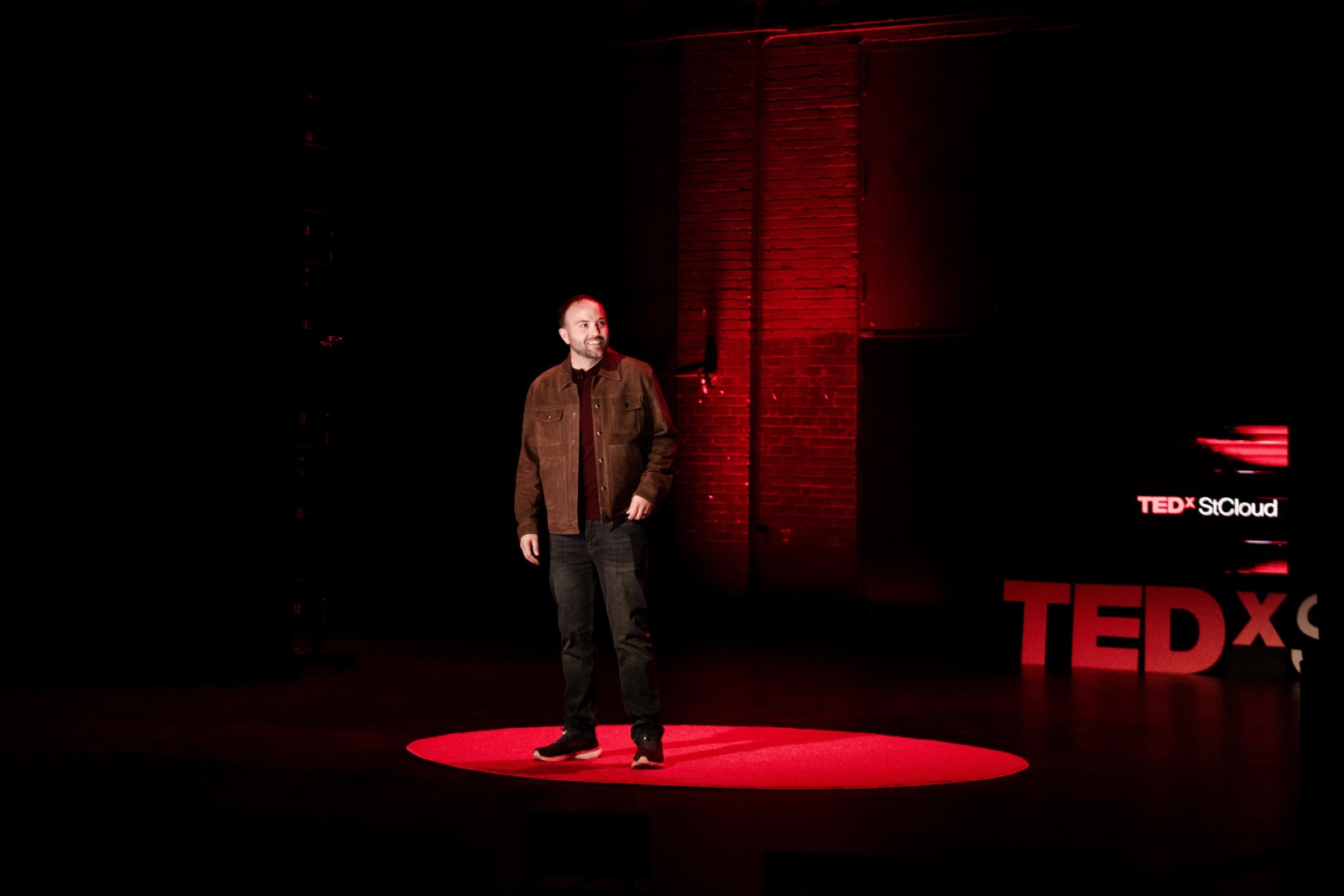
One of the outfits she came back with was a brown suede jacket, a pair of jeans, and an orange t-shirt.
The second I put that jacket on and looked in the mirror, I felt like a million bucks.
We went to a bunch of other stores, but nothing even came close to the feeling I had when I put that jacket on.
It was the first time in my life I went up to a register in a clothing store and presented my credit card without any hesitation.
Now, it's hard to get out of the "wear a free t-shirt you got from a tech conference paired with a hoodie you got from working at a marathon and jeans you got four years ago that have the shape of your cell phone permanently burned into your left thigh" mentality, so no, I won't be retiring the jacket. It will be brought out at most important events in the near future.
But if you're going to be giving your own important speech, I highly suggest you find your own "jacket" to give you some artificial confidence.
The worst part is the hour before you go on stage.
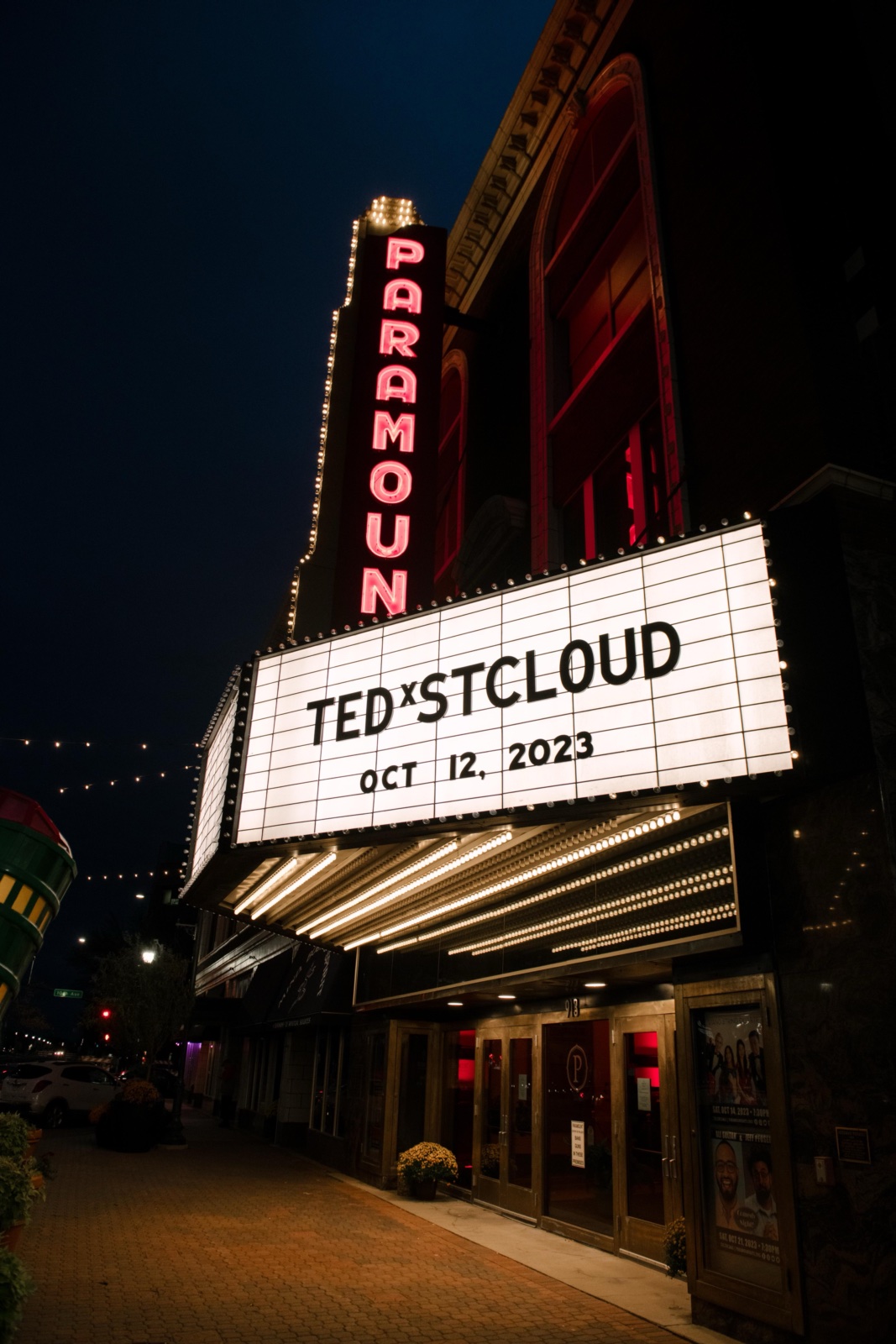
Pulling up to the theatre and seeing "TEDx St. Cloud" proudly displayed in the marquee was exciting.
Sitting down and having lunch with the talent and crew was delightful.
Grabbing a pre-dinner beer with my family at the brewery down the road was relaxing.
Getting down to the green room and putting on that jacket for realsies? Absolutely terrifying.
Here's a graph of my heart rate during that day:
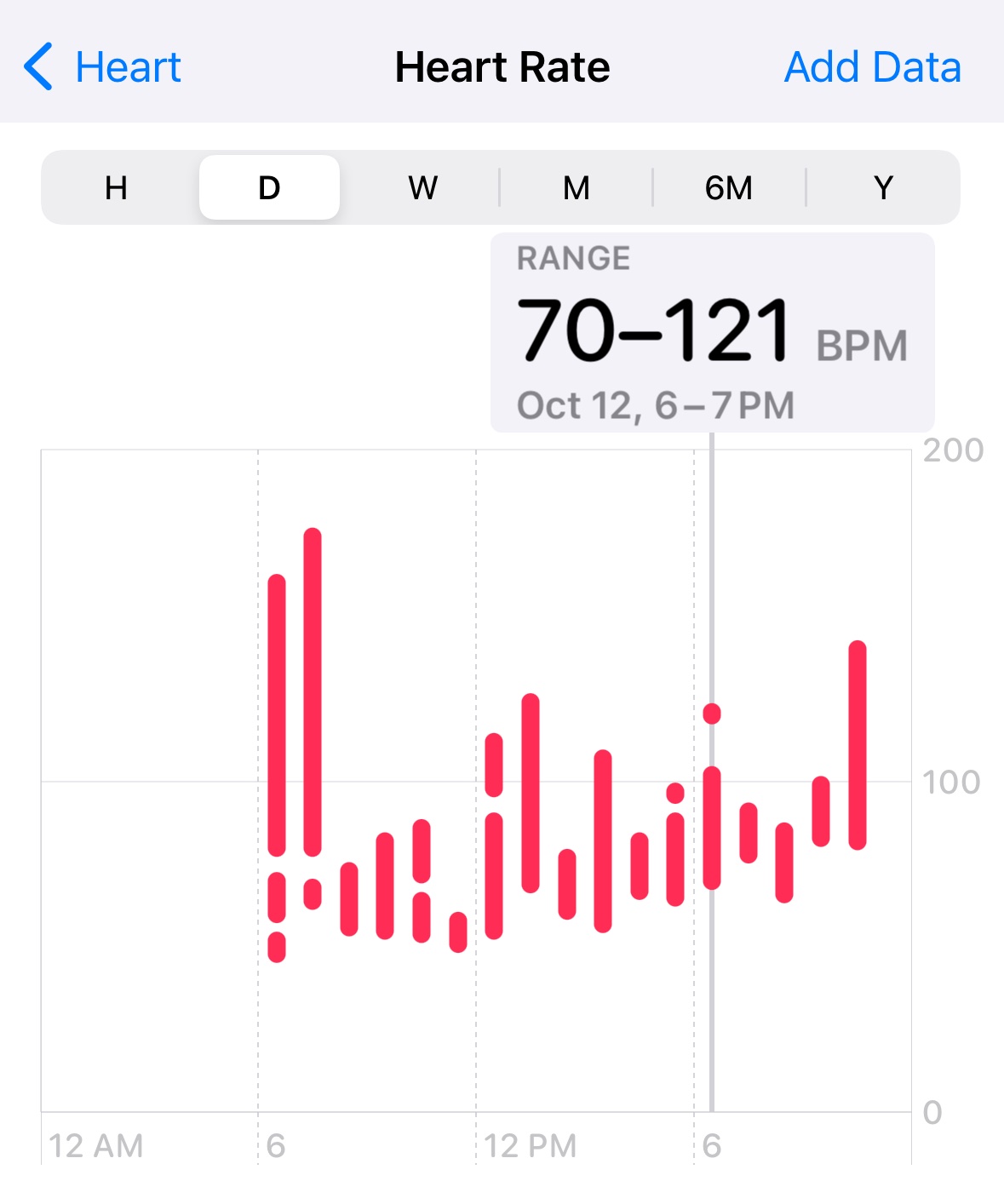
My resting heart rate is in the mid 50s (which you can see around the 11am mark as we were driving up to the event). I was roughly 2.5x that in the moments before walking on stage.
What worked for me? While in the green room, I did a combination of the following activities:
- Positive self talk and visualization
- Deep breathing
- Reading messages that my friends were sending me wishing me luck and telling me I would nail it
- Push ups
- Crying
- Distracting myself by talking with others around me
- Re-running the first few moments of the talk out loud
I can't say which one of those was the most helpful, but killing time prior to being on stage was the absolute worst part.
I'm just grateful I went first.
The biggest surprise of the whole experience came while presenting.
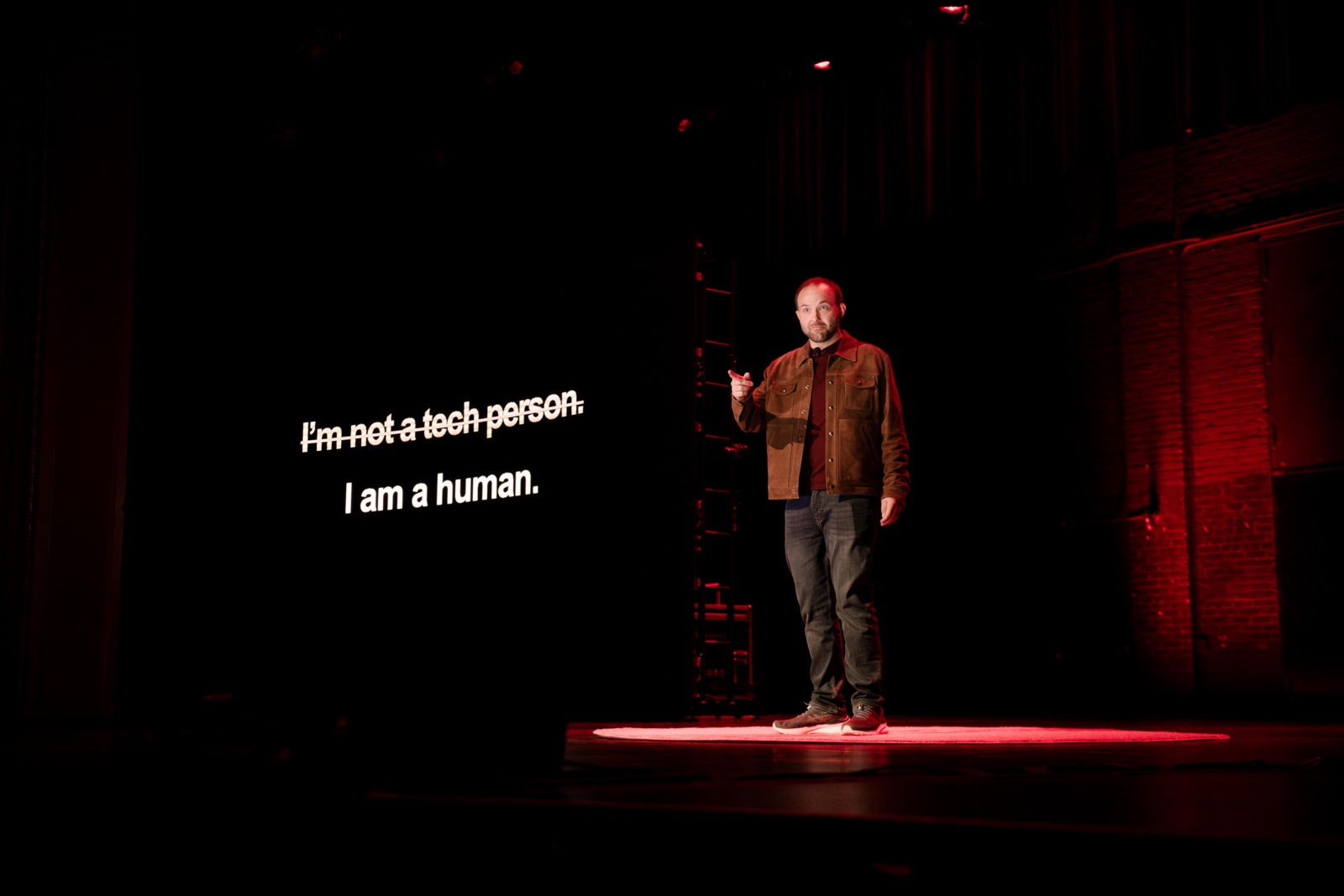
I'm sure you must be sick of me talking about how much I rehearsed at this point in my post.
But seriously, I must have said this talk more than a hundred times over the course of a month.
Each and every time I practiced the talk, I ended with the same feeling: discontent.
I was disappointed that I missed certain beats or that my timing was slightly inconsistent. I was frustrated that I wasn't presenting a novel enough idea around the topic. I was envisioning myself standing in that red dot and getting to the end of my talk, and looking out into a sea of politely-clapping faces, each with a "meh" reaction on their faces.
Putting myself out there and sharing what I believe to be true about technology proved to be quite a fertile field for my depression and anxiety to sow seeds of doubt.
With my heart rate peaking and my anxiety shouting into my ears, I walked out on stage and looked around the audience.
There were hundreds of people cheering, clapping, staring back at me with big smiles on their faces. They were ready to learn, be entertained, and be inspired.
And all of that fear? All of those moments of self doubt? All of that nasty stuff I was telling myself for weeks prior to that moment?
They instantly vanished.
I hadn't even said a word yet, and it felt like my shoulders lowered by a foot.
The feeling of dread was replaced with certainty that I was exactly where I needed to be. I was entirely in the moment, eager to share what I've been thinking about AI with an audience of people who were ready to hear it.
Walking off the stage was the first time I concluded my speech without disappointment. Instead, I was filled with an unexpected emotion: pride.
5 out of 5 stars would do again
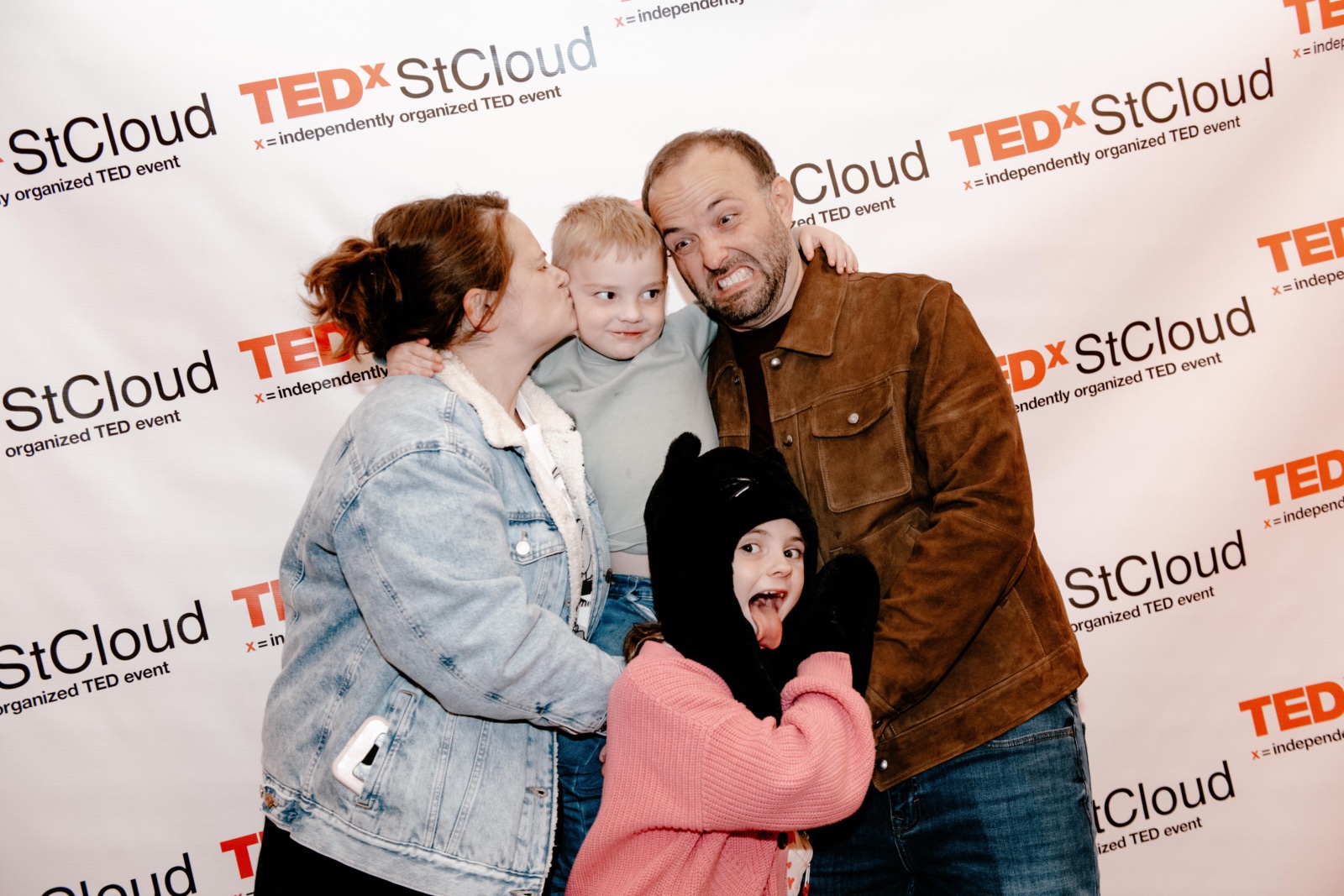
The part of my talk I'm most proud of was a moment where I asked the audience to shout out what they think would finish various phrases.
The second time I did it, I heard the audience shout out the answer I was expecting ("paint"), but a beat later, I hear my son, clear as day, yell "ice cream".
It was the perfect moment, an unexpected contribution that acts as the sprinkles on top of the whipped cream which sits atop the sundae that represents my entire TEDx experience.
There are a ton of people I insist on thanking for helping me get to the stage, so I'll do so quickly here (if I left you off this list, assume I did it with malicious intent):
- Brian Hart for giving me the opportunity to help people feel comfortable with artificial intelligence
- Sonja Gidlow for numerous therapy sessions and reassuring me that I'm on the right track
- Shannon Bornholdt for always giving me the right advice and for picking out the dopest jacket on the planet
- Joe Beard and all my Bionic Giant coworkers for giving me the space to be consumed with this talk for a few weeks
- Wil Galvez for making the trek to St. Cloud to take epic photos of me
- Kelly Heitz, Dana Hagemann, Tony Collen, and Sara Sargent for reviewing early drafts of my speech and providing significant feedback
- Justin Grammens and Maria Ploessl for giving a rookie AI speaker a chance earlier this year
- My mom and dad for decades of sitting in the front row and cheering me on
- My siblings and their partners for having an uncanny ability to both support me unconditionally and keep my ego in check
- and finally, those of you who shot me a note of encouragement and support throughout the last few months.
So yeah, that was my TEDx experience. I guess to wrap this all up, I want to reiterate how grateful I am to have this opportunity.
There's a good reason why people brag about being a TEDx speaker: it take a lot of hard work and vulnerability to pull off a quality speech. The entire process proved to be a unique opportunity to both help others by making them more comfortable with AI, and to help myself practice positive self talk and build my confidence.
Finally, as the kids say: thank you for coming to my TED talk.


